Brighter NightsLighting Technologies

Holiday Season 2026
Holiday Season 2026
If you already pay a contractor to hang and take down Christmas lights on your roofline every year, you already know the number. Most homeowners spend somewhere between $1,000 and $3,000 a year just for the roofline portion of a seasonal install, and that number repeats every single November for as long as you own the house.
Permanent roofline lighting changes that math. It’s a one-time install that runs the same red, green, and white patterns every December, then quietly becomes something else for the other eleven months. Here’s how the comparison actually works, and what the system does once the holidays are over.
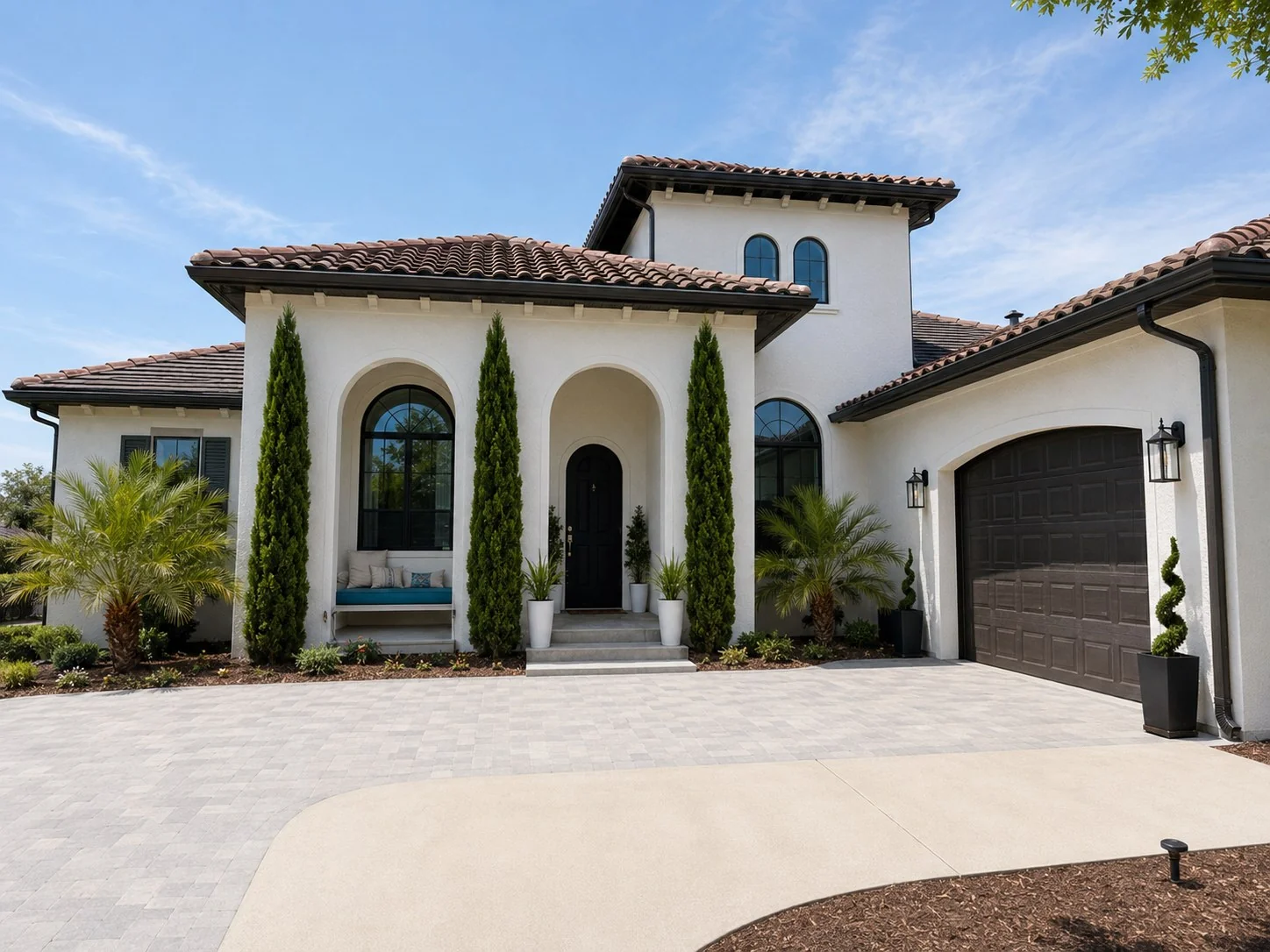
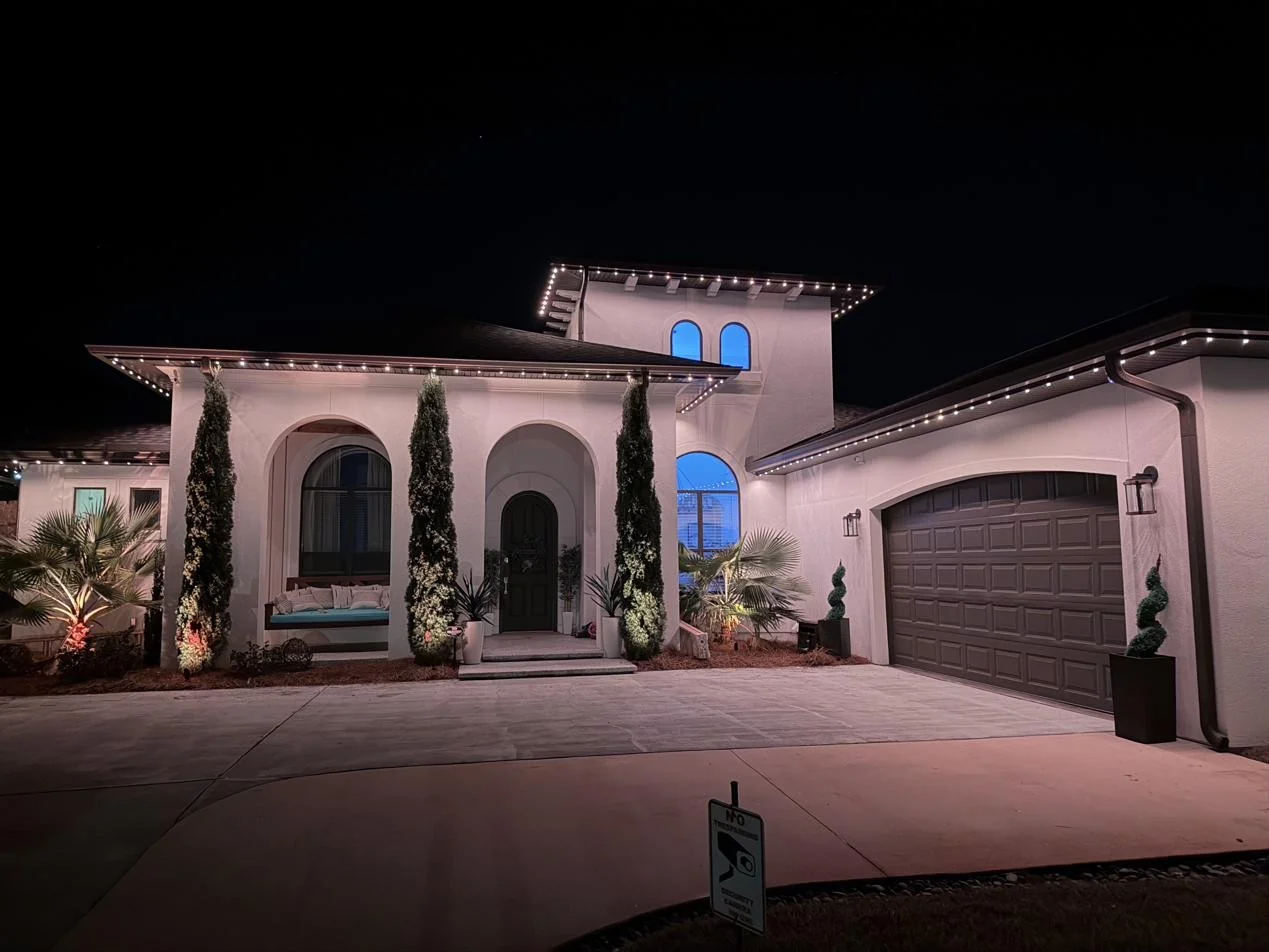
A seasonal crew charging $1,000 to $3,000 a year for roofline lights alone means you’ve spent $2,000 to $9,000 by year three, and you own nothing at the end of it. A permanent system is a single install cost, and typically pays for itself against that same seasonal spend somewhere around year two or three. After that, the system is already paid for and every season after is free.
Two-inch color-matched aluminum track mounts tight to the fascia in black, bronze, or white. During the day it reads as a line of trim, not a fixture. The fixtures are only visible when they’re lit, and a certified installer sets the run so there’s nothing hanging, no visible wire, no strand to see.
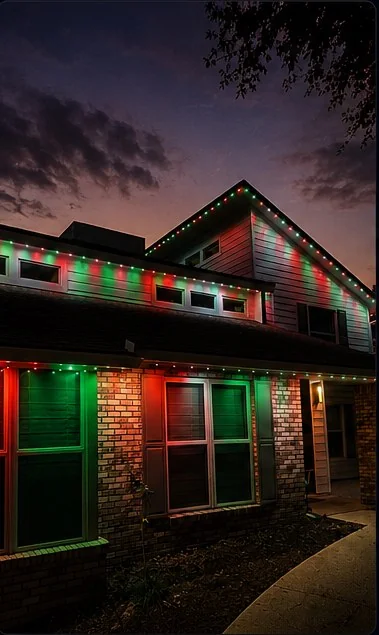
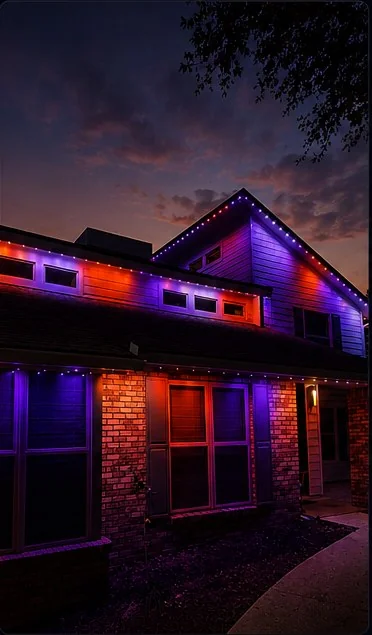
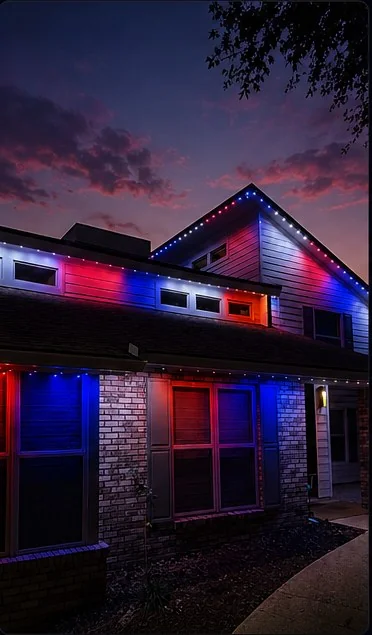
The same lights that run classic red, green, and white in December switch to orange and purple for Halloween, red, white, and blue for the Fourth of July, or your team’s colors on game day, all from the app, all on the same fixtures. One tap on December 1st, one tap back to warm white on January 1st. No ladder, no storage bin, no tangled strings to fight with next year.
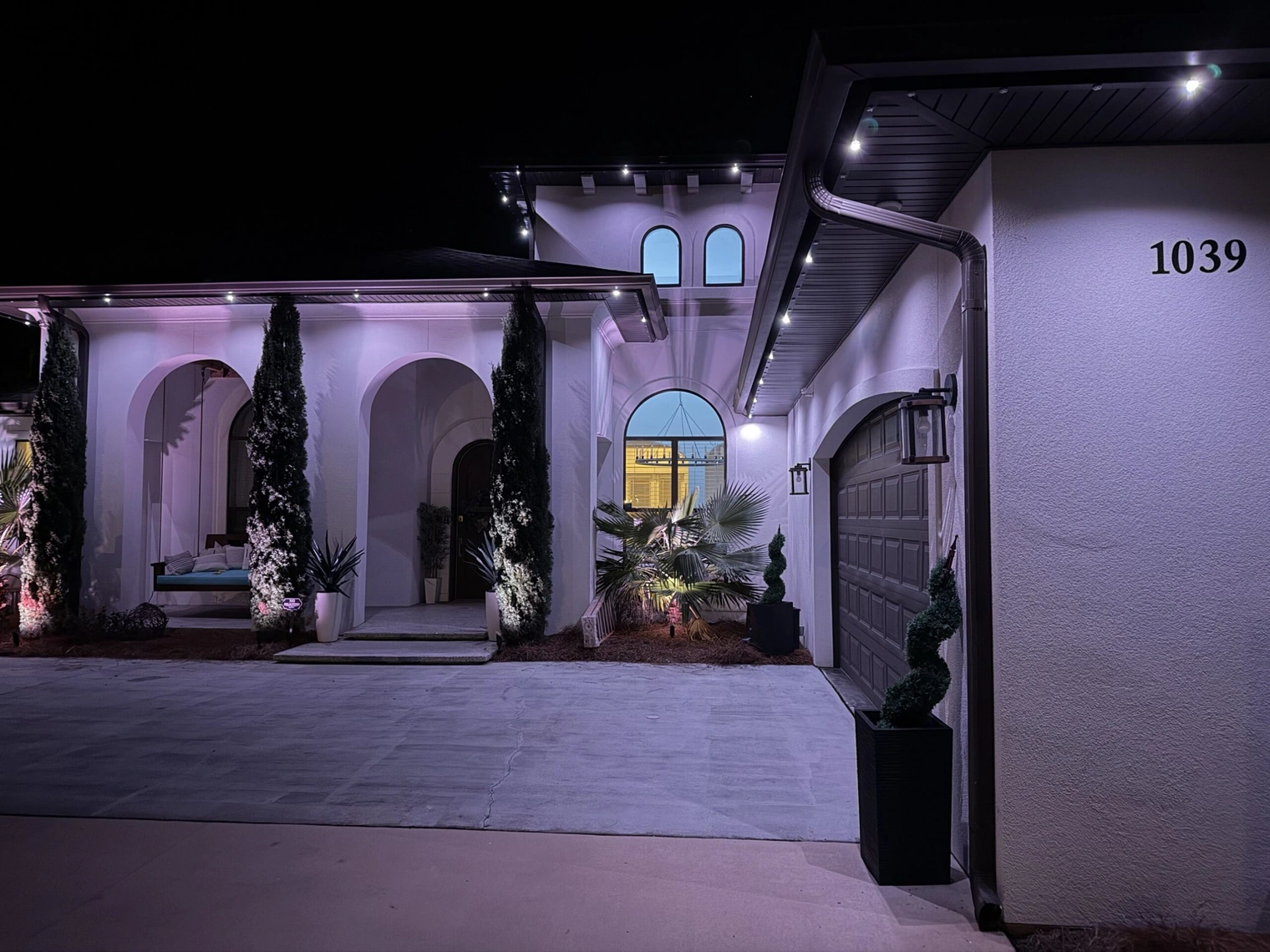
The rest of the year, most homeowners run the system on warm white as everyday architectural lighting, outlining the roofline the way you’d expect from a permanent fixture. You can also run it selectively, spacing the pattern out for a quieter, downlit look.
Two looks, one system
Same fixtures, same run. Switch the pattern from the app and save it.
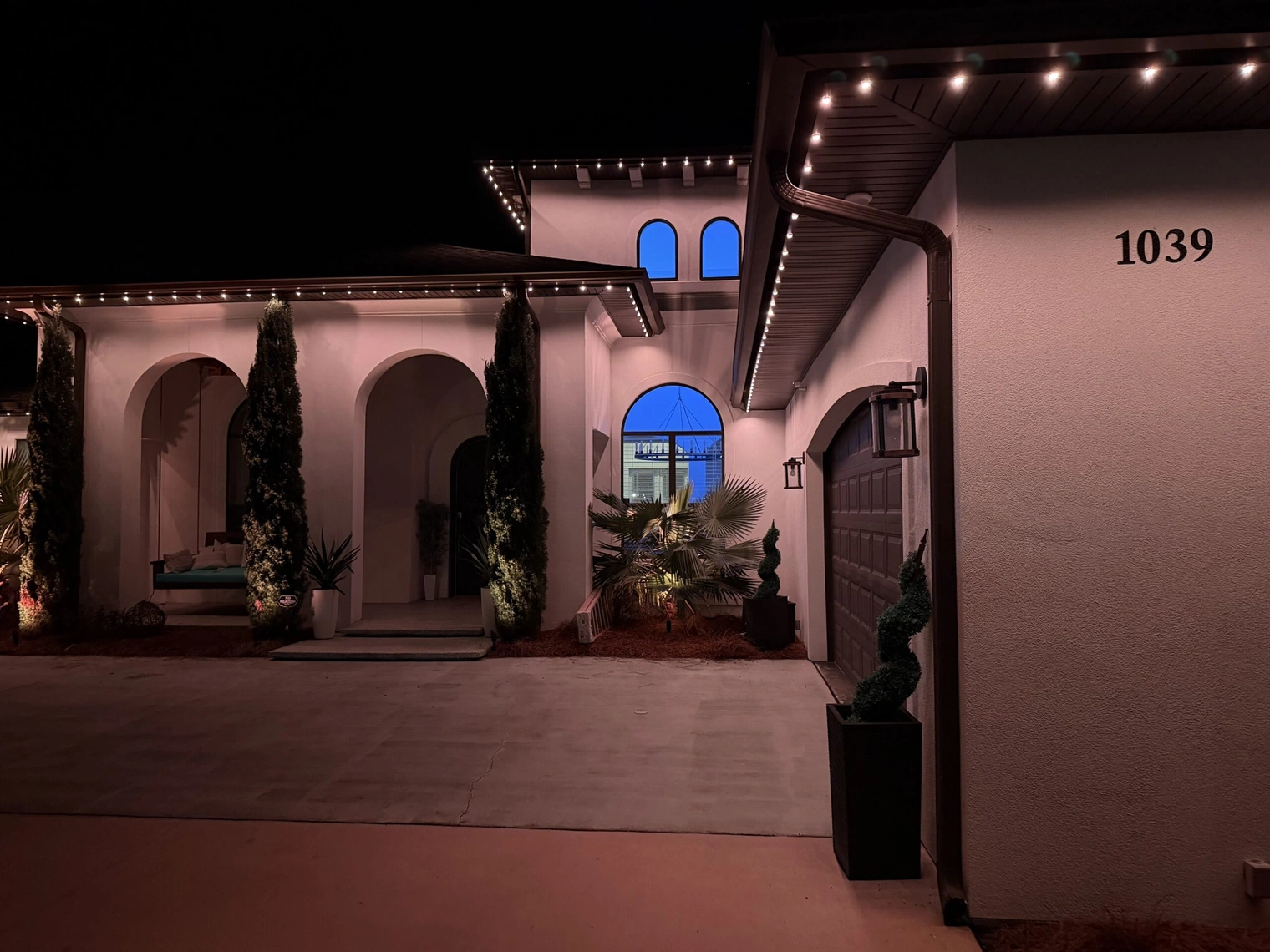
One fixture lit, several off. A quieter, spaced-out glow for a nightly look.
The system runs at 24 volts through spliceless, sealed T-connectors, with zero hand-made wire splices anywhere in the run. Most competing systems run at 12 volts and splice at every power injection point, which is exactly where connection heat and corrosion failures start. Every fixture and connector is sealed and salt-tested, the controller and power supply are rated IP68, and the light strands and bulbs are rated IP67. It’s a closed system end to end, plug and play for the installer, nothing exposed to the weather. Track, strands, and power components carry a 10-year warranty; the controller carries 3.
All of it runs on Bluetooth mesh, the same technology used across every Brighter Nights system, with a 200-foot open-air range and no Wi-Fi required to operate. Your lights keep working even if your internet doesn’t.
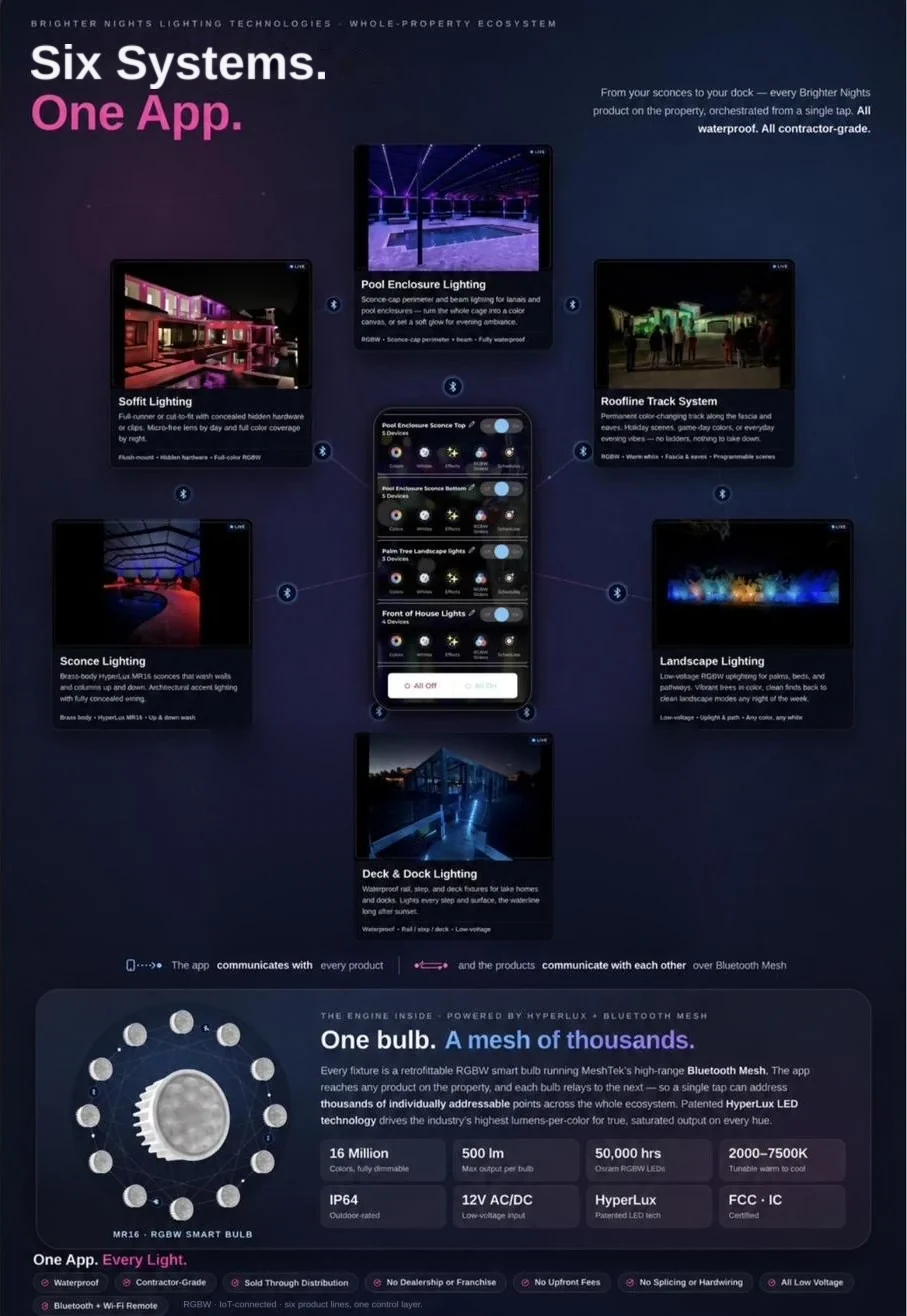
The roofline is only the beginning. Every Brighter Nights system, soffit, landscape, sconce, pool enclosure, and deck and dock, joins the same Bluetooth mesh and answers to the same app. Add a system next year and it simply appears alongside the rest, no second app, no second controller, no second service call. Homeowners who start with the roofline for the holidays typically come back for the rest of the property once they see how the app actually works.
Same system, different holiday. See permanent Halloween lights.
See the full roofline system, or get an instant estimate before the season gets busy.
Access Level
Choose your account type to continue.
Welcome to Brighter Nights
Ask the Light Genie any lighting question you have
Design, control & warranty in one place
Quote jobs & install faster than ever
Territory insights & inventory intel
We are working on the site right now and adding a bunch of new features. If you run into any issue, please let us know. We are responding in real time.
When you close this, look for Report an issue in the menu bar. You can report a problem or suggest a change any time. We are here to support you.